I'm currently reworking this page, it's content is still relevant, but don't hesitate to come again later for a better version!
I'm currently reworking this page, it's content is still relevant, but don't hesitate to come again later for a better version!
I'm currently reworking this page, it's content is still relevant, but don't hesitate to come again later for a better version!
I'm currently reworking this page, it's content is still relevant, but don't hesitate to come again later for a better version!
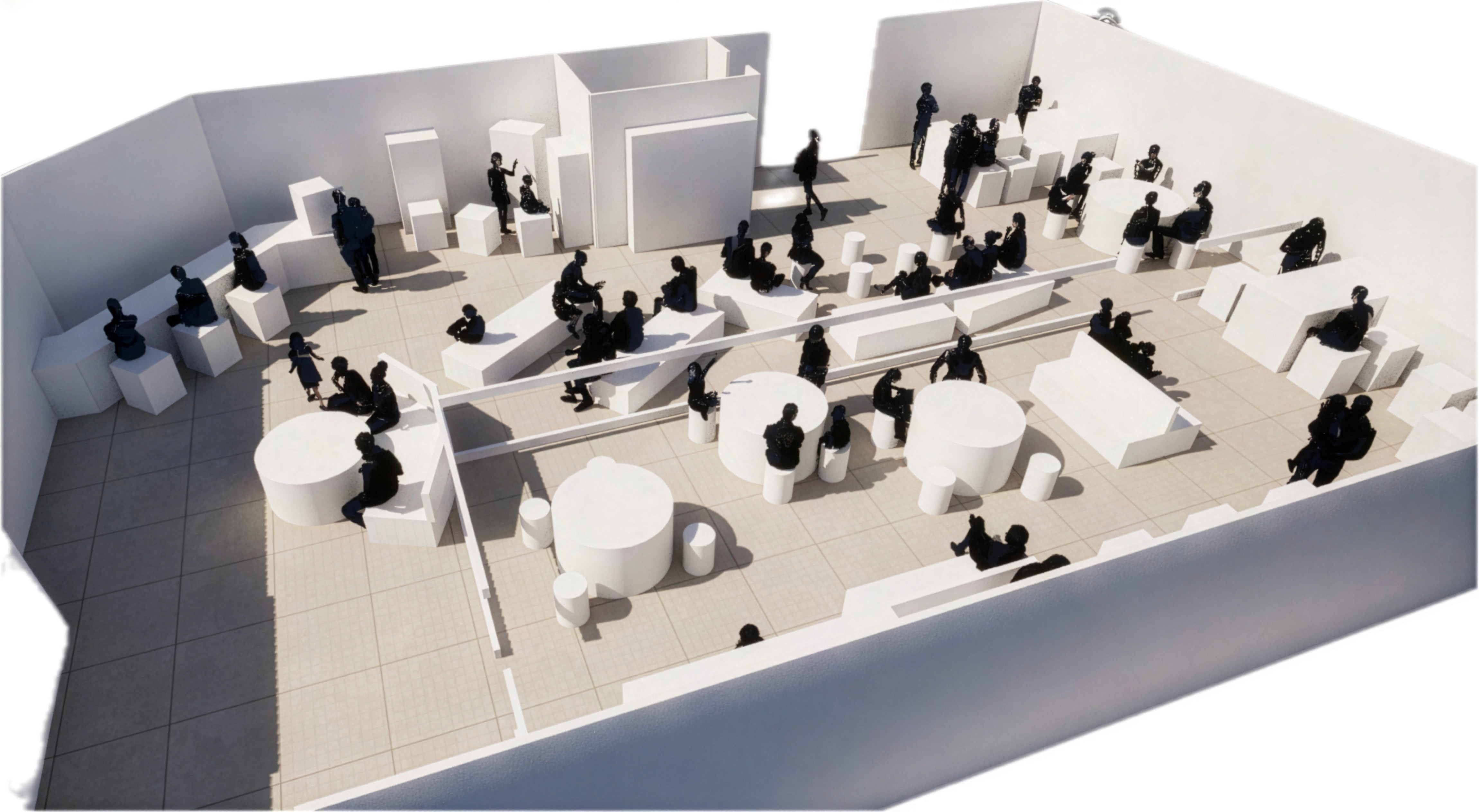
QUEUE LINE THESIS
QUEUE LINE THESIS
QUEUE LINE THESIS
1 Year
1 Year
1 Year
DURATION
DURATION
Service Design
UX Design
Research
Service Design
UX Design
Research
Service Design
UX Design
Research
ROLES
ROLES
User analysis
Problem Solving
User analysis
Problem Solving
User analysis
Problem Solving
SKILLS INVOLVED
SKILLS INVOLVED
Solo
Solo
Solo
TEAM
TEAM
BRIEF
BRIEF
I had to select a subject for my master’s thesis project, and I chose the entertainment industry, specifically focusing on how we can enhance the queue lines at theme parks through interaction and user-centered design.
I had to select a subject for my master’s thesis project, and I chose the entertainment industry, specifically focusing on how we can enhance the queue lines at theme parks through interaction and user-centered design.
I had to select a subject for my master’s thesis project, and I chose the entertainment industry, specifically focusing on how we can enhance the queue lines at theme parks through interaction and user-centered design.
Complete version
In this page, I’ll provide a brief summary of my thesis and focus primarily on the results and the solution I envisioned. If you’re interested in exploring all my work on this project and its evolution, I encourage you to view the entire document here : https://qdsrgbswderh.my.canva.site/prp
In this page, I’ll provide a brief summary of my thesis and focus primarily on the results and the solution I envisioned. If you’re interested in exploring all my work on this project and its evolution, I encourage you to view the entire document here : https://qdsrgbswderh.my.canva.site/prp
In this page, I’ll provide a brief summary of my thesis and focus primarily on the results and the solution I envisioned. If you’re interested in exploring all my work on this project and its evolution, I encourage you to view the entire document here : https://qdsrgbswderh.my.canva.site/prp
Context: "The Worst Part of the Fun"
Theme parks promise immersion and magic. But there is a glitch in the matrix: the queue line.
For my Master’s research project, I tackled a universal frustration. While queues are operationally necessary to manage crowds, they are essentially 'dead time' for visitors.
My challenge was simple yet ambitious: How can we transform passive waiting into an active, memorable part of the attraction?
Theme parks promise immersion and magic. But there is a glitch in the matrix: the queue line.
For my Master’s research project, I tackled a universal frustration. While queues are operationally necessary to manage crowds, they are essentially 'dead time' for visitors.
My challenge was simple yet ambitious: How can we transform passive waiting into an active, memorable part of the attraction?
Theme parks promise immersion and magic. But there is a glitch in the matrix: the queue line.
For my Master’s research project, I tackled a universal frustration. While queues are operationally necessary to manage crowds, they are essentially 'dead time' for visitors.
My challenge was simple yet ambitious: How can we transform passive waiting into an active, memorable part of the attraction?
Theme parks promise immersion and magic. But there is a glitch in the matrix: the queue line.
For my Master’s research project, I tackled a universal frustration. While queues are operationally necessary to manage crowds, they are essentially 'dead time' for visitors.
My challenge was simple yet ambitious: How can we transform passive waiting into an active, memorable part of the attraction?
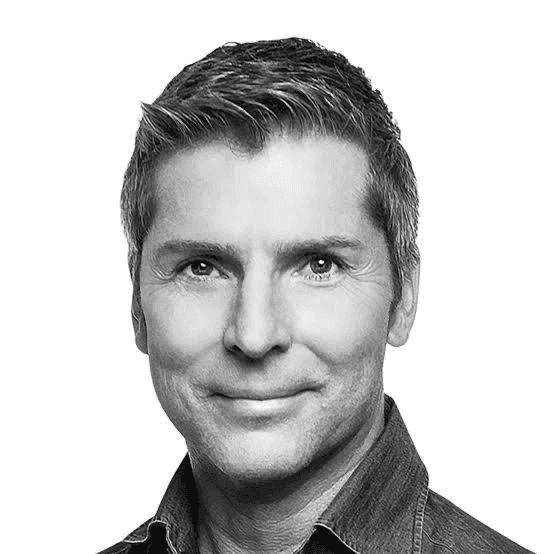
"People don't like to wait in lines anymore, so, you know, we're working on lands that have no queue lines. People would still be waiting, but they just won't be standing in queues; they'll be doing other things. And the challenges for that kind of stuff are queue lines are a very efficient use of space; you stack people in, they go very tight, and now you can fit more people in your park. There's just a really bad guest experience, and the tolerance for that is getting less and less and less as people don't have to wait so much for things."
"People don't like to wait in lines anymore, so, you know, we're working on lands that have no queue lines. People would still be waiting, but they just won't be standing in queues; they'll be doing other things. And the challenges for that kind of stuff are queue lines are a very efficient use of space; you stack people in, they go very tight, and now you can fit more people in your park. There's just a really bad guest experience, and the tolerance for that is getting less and less and less as people don't have to wait so much for things."
"People don't like to wait in lines anymore, so, you know, we're working on lands that have no queue lines. People would still be waiting, but they just won't be standing in queues; they'll be doing other things. And the challenges for that kind of stuff are queue lines are a very efficient use of space; you stack people in, they go very tight, and now you can fit more people in your park. There's just a really bad guest experience, and the tolerance for that is getting less and less and less as people don't have to wait so much for things."
"People don't like to wait in lines anymore, so, you know, we're working on lands that have no queue lines. People would still be waiting, but they just won't be standing in queues; they'll be doing other things. And the challenges for that kind of stuff are queue lines are a very efficient use of space; you stack people in, they go very tight, and now you can fit more people in your park. There's just a really bad guest experience, and the tolerance for that is getting less and less and less as people don't have to wait so much for things."
Bruce Vaughn,
Chief Creative Executive of Walt Disney Imagineering
Bruce Vaughn,
Chief Creative Executive of Walt Disney Imagineering
Bruce Vaughn,
Chief Creative Executive of Walt Disney Imagineering
Bruce Vaughn,
Chief Creative Executive of Walt Disney Imagineering
Discovery & User research
I conducted deep-dive research to understand not just how long people wait, but how they feel while doing it.
I conducted deep-dive research to understand not just how long people wait, but how they feel while doing it.
I conducted deep-dive research to understand not just how long people wait, but how they feel while doing it.
I conducted deep-dive research to understand not just how long people wait, but how they feel while doing it.
The Quantitative Reality
Waiting isn't just a nuisance; it’s a business risk. Through a survey of 41 participants and in-depth interviews with 18 recent visitors, I uncovered the true impact of queue lines on the guest experience:
The Dealbreaker: For 78% of respondents, predicted wait times are a deciding factor for booking a trip. Even worse, 20% have cancelled a trip entirely because of the fear to wait for too long.
The Reality Gap: While the actual wait time is a logistical issue, the perceived wait time is a psychological one. Visitors described traditional lines as 'vulnerable' and 'wasted time'.
Waiting isn't just a nuisance; it’s a business risk. Through a survey of 41 participants and in-depth interviews with 18 recent visitors, I uncovered the true impact of queue lines on the guest experience:
The Dealbreaker: For 78% of respondents, predicted wait times are a deciding factor for booking a trip. Even worse, 20% have cancelled a trip entirely because of the fear to wait for too long.
The Reality Gap: While the actual wait time is a logistical issue, the perceived wait time is a psychological one. Visitors described traditional lines as 'vulnerable' and 'wasted time'.
Waiting isn't just a nuisance; it’s a business risk. Through a survey of 41 participants and in-depth interviews with 18 recent visitors, I uncovered the true impact of queue lines on the guest experience:
The Dealbreaker: For 78% of respondents, predicted wait times are a deciding factor for booking a trip. Even worse, 20% have cancelled a trip entirely because of the fear to wait for too long.
The Reality Gap: While the actual wait time is a logistical issue, the perceived wait time is a psychological one. Visitors described traditional lines as 'vulnerable' and 'wasted time'.
Waiting isn't just a nuisance; it’s a business risk. Through a survey of 41 participants and in-depth interviews with 18 recent visitors, I uncovered the true impact of queue lines on the guest experience:
The Dealbreaker: For 78% of respondents, predicted wait times are a deciding factor for booking a trip. Even worse, 20% have cancelled a trip entirely because of the fear to wait for too long.
The Reality Gap: While the actual wait time is a logistical issue, the perceived wait time is a psychological one. Visitors described traditional lines as 'vulnerable' and 'wasted time'.
The Psychology of Time
Time is relative. My research into the psychology of waiting (Zakay & Block, 1997) revealed a key insight: Occupied time feels shorter than unoccupied time.
When a guest is passive, anxiety and boredom stretch every minute. But when engaged in active anticipation or play, the perception of time shrinks. This validated my hypothesis: we don't necessarily need to reduce the minutes, we need to change the mindset.
Time is relative. My research into the psychology of waiting (Zakay & Block, 1997) revealed a key insight: Occupied time feels shorter than unoccupied time.
When a guest is passive, anxiety and boredom stretch every minute. But when engaged in active anticipation or play, the perception of time shrinks. This validated my hypothesis: we don't necessarily need to reduce the minutes, we need to change the mindset.
Time is relative. My research into the psychology of waiting (Zakay & Block, 1997) revealed a key insight: Occupied time feels shorter than unoccupied time.
When a guest is passive, anxiety and boredom stretch every minute. But when engaged in active anticipation or play, the perception of time shrinks. This validated my hypothesis: we don't necessarily need to reduce the minutes, we need to change the mindset.
Time is relative. My research into the psychology of waiting (Zakay & Block, 1997) revealed a key insight: Occupied time feels shorter than unoccupied time.
When a guest is passive, anxiety and boredom stretch every minute. But when engaged in active anticipation or play, the perception of time shrinks. This validated my hypothesis: we don't necessarily need to reduce the minutes, we need to change the mindset.
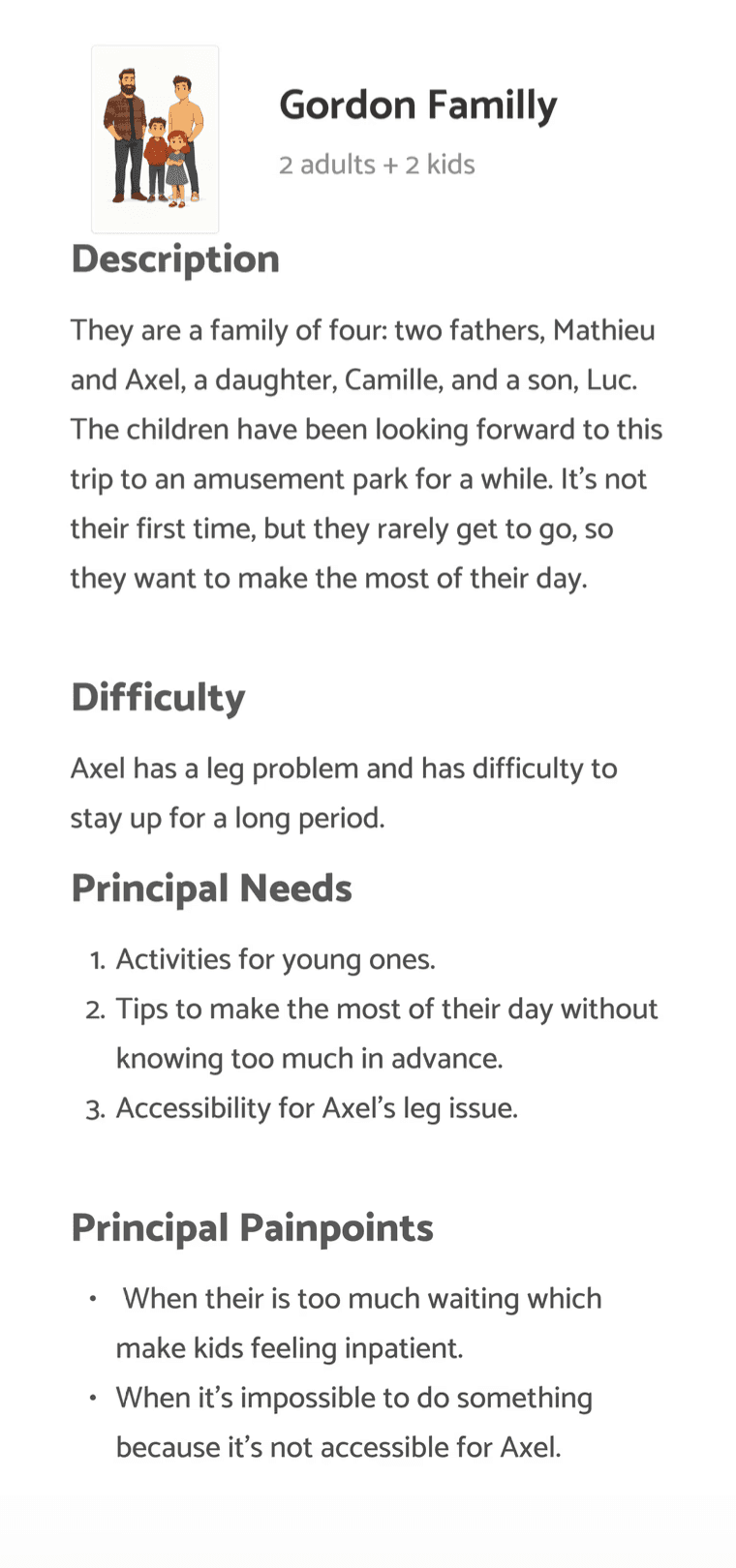
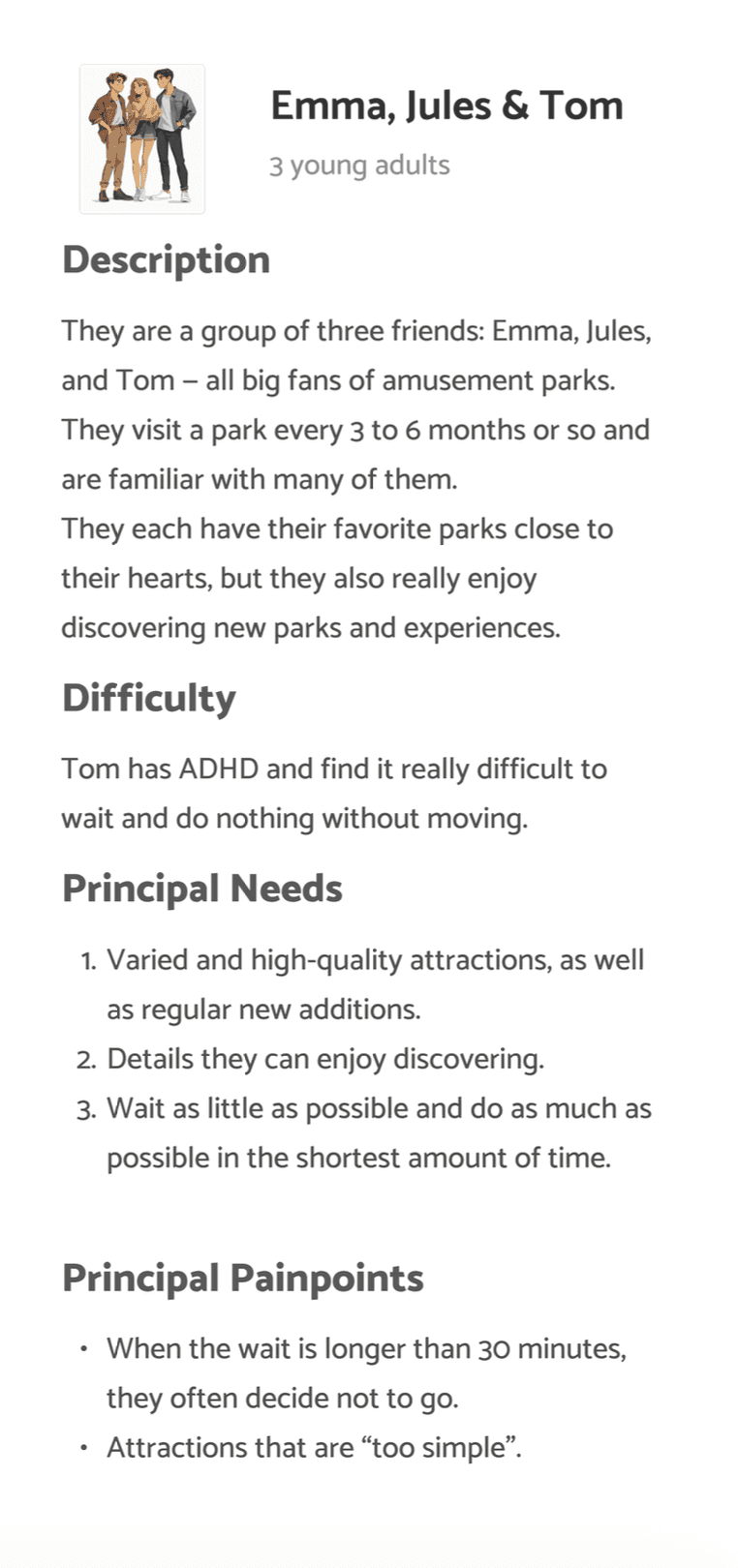
Personas
To ensure my solution was inclusive, I focused on two distinct user archetypes with specific friction points:
To ensure my solution was inclusive, I focused on two distinct user archetypes with specific friction points:
To ensure my solution was inclusive, I focused on two distinct user archetypes with specific friction points:
To ensure my solution was inclusive, I focused on two distinct user archetypes with specific friction points:
The research was clear. Guests don't hate the ride; they hate the helplessness of the line. This led to my definitive design question:
How can we rethink queue lines to turn them into a genuine entertainment experience that minimizes the perception of waiting?
The research was clear. Guests don't hate the ride; they hate the helplessness of the line. This led to my definitive design question:
How can we rethink queue lines to turn them into a genuine entertainment experience that minimizes the perception of waiting?
The research was clear. Guests don't hate the ride; they hate the helplessness of the line. This led to my definitive design question:
How can we rethink queue lines to turn them into a genuine entertainment experience that minimizes the perception of waiting?
The research was clear. Guests don't hate the ride; they hate the helplessness of the line. This led to my definitive design question:
How can we rethink queue lines to turn them into a genuine entertainment experience that minimizes the perception of waiting?
My proposition : Waiting Lounges
My research highlighted three core needs: Comfort, Services, and Entertainment. A standard zigzag queue couldn't offer this.
I proposed a radical shift: The Waiting Lounge. Instead of standing in a line, visitors enter a themed area, (for my thesis, I choose a western theme). It’s a comfortable space with seating and A/C, serving as a "buffer" before the ride. Those could be very modular and could include different element, serve as a pre-show, a way to organize people before riding the attraction or a way to introduce the storyline of the ride.
My research highlighted three core needs: Comfort, Services, and Entertainment. A standard zigzag queue couldn't offer this.
I proposed a radical shift: The Waiting Lounge. Instead of standing in a line, visitors enter a themed area, (for my thesis, I choose a western theme). It’s a comfortable space with seating and A/C, serving as a "buffer" before the ride. Those could be very modular and could include different element, serve as a pre-show, a way to organize people before riding the attraction or a way to introduce the storyline of the ride.
My research highlighted three core needs: Comfort, Services, and Entertainment. A standard zigzag queue couldn't offer this.
I proposed a radical shift: The Waiting Lounge. Instead of standing in a line, visitors enter a themed area, (for my thesis, I choose a western theme). It’s a comfortable space with seating and A/C, serving as a "buffer" before the ride. Those could be very modular and could include different element, serve as a pre-show, a way to organize people before riding the attraction or a way to introduce the storyline of the ride.
My research highlighted three core needs: Comfort, Services, and Entertainment. A standard zigzag queue couldn't offer this.
I proposed a radical shift: The Waiting Lounge. Instead of standing in a line, visitors enter a themed area, (for my thesis, I choose a western theme). It’s a comfortable space with seating and A/C, serving as a "buffer" before the ride. Those could be very modular and could include different element, serve as a pre-show, a way to organize people before riding the attraction or a way to introduce the storyline of the ride.
Those lounges will be strategically placed along the waiting line, welcoming groups of people and replacing the traditional waiting queue. Each lounge will offer a unique environment, catering to different preferences and enhancing the overall experience for returning guests. As the queue progresses, guests will be gradually invited to proceed and swiftly access the attraction.
These lounges can be dynamically adjusted throughout the day. For instance, additional lounges can be opened when the queue becomes longer, or the waiting time can be extended or shortened based on the number of trains operating or the number of operators present.
Those lounges will be strategically placed along the waiting line, welcoming groups of people and replacing the traditional waiting queue. Each lounge will offer a unique environment, catering to different preferences and enhancing the overall experience for returning guests. As the queue progresses, guests will be gradually invited to proceed and swiftly access the attraction.
These lounges can be dynamically adjusted throughout the day. For instance, additional lounges can be opened when the queue becomes longer, or the waiting time can be extended or shortened based on the number of trains operating or the number of operators present.
Those lounges will be strategically placed along the waiting line, welcoming groups of people and replacing the traditional waiting queue. Each lounge will offer a unique environment, catering to different preferences and enhancing the overall experience for returning guests. As the queue progresses, guests will be gradually invited to proceed and swiftly access the attraction.
These lounges can be dynamically adjusted throughout the day. For instance, additional lounges can be opened when the queue becomes longer, or the waiting time can be extended or shortened based on the number of trains operating or the number of operators present.
Those lounges will be strategically placed along the waiting line, welcoming groups of people and replacing the traditional waiting queue. Each lounge will offer a unique environment, catering to different preferences and enhancing the overall experience for returning guests. As the queue progresses, guests will be gradually invited to proceed and swiftly access the attraction.
These lounges can be dynamically adjusted throughout the day. For instance, additional lounges can be opened when the queue becomes longer, or the waiting time can be extended or shortened based on the number of trains operating or the number of operators present.
Here's a small animation on what it could work :
Here's a small animation on what it could work :
Here's a small animation on what it could work :
Let's see what it could looks like
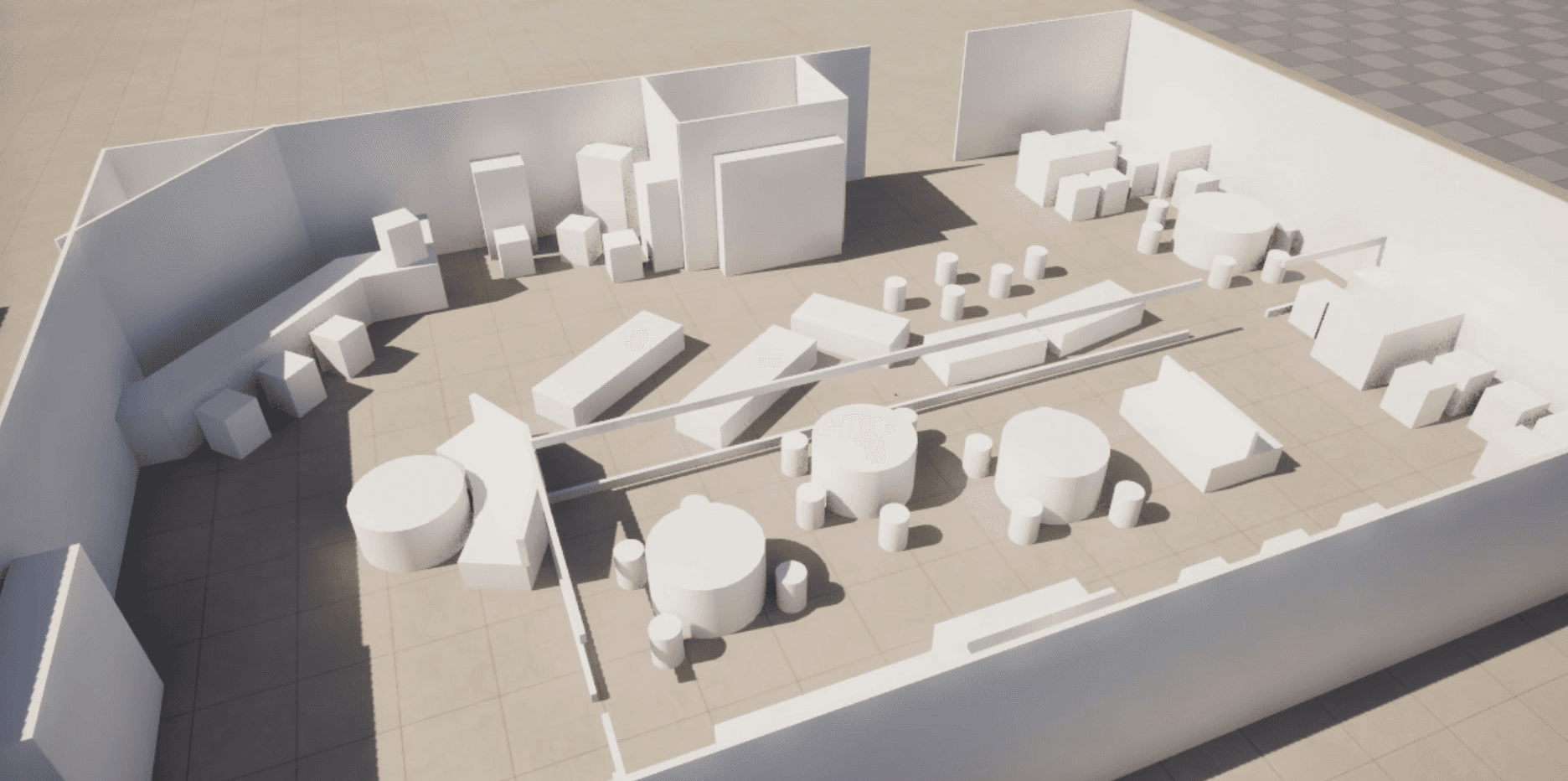
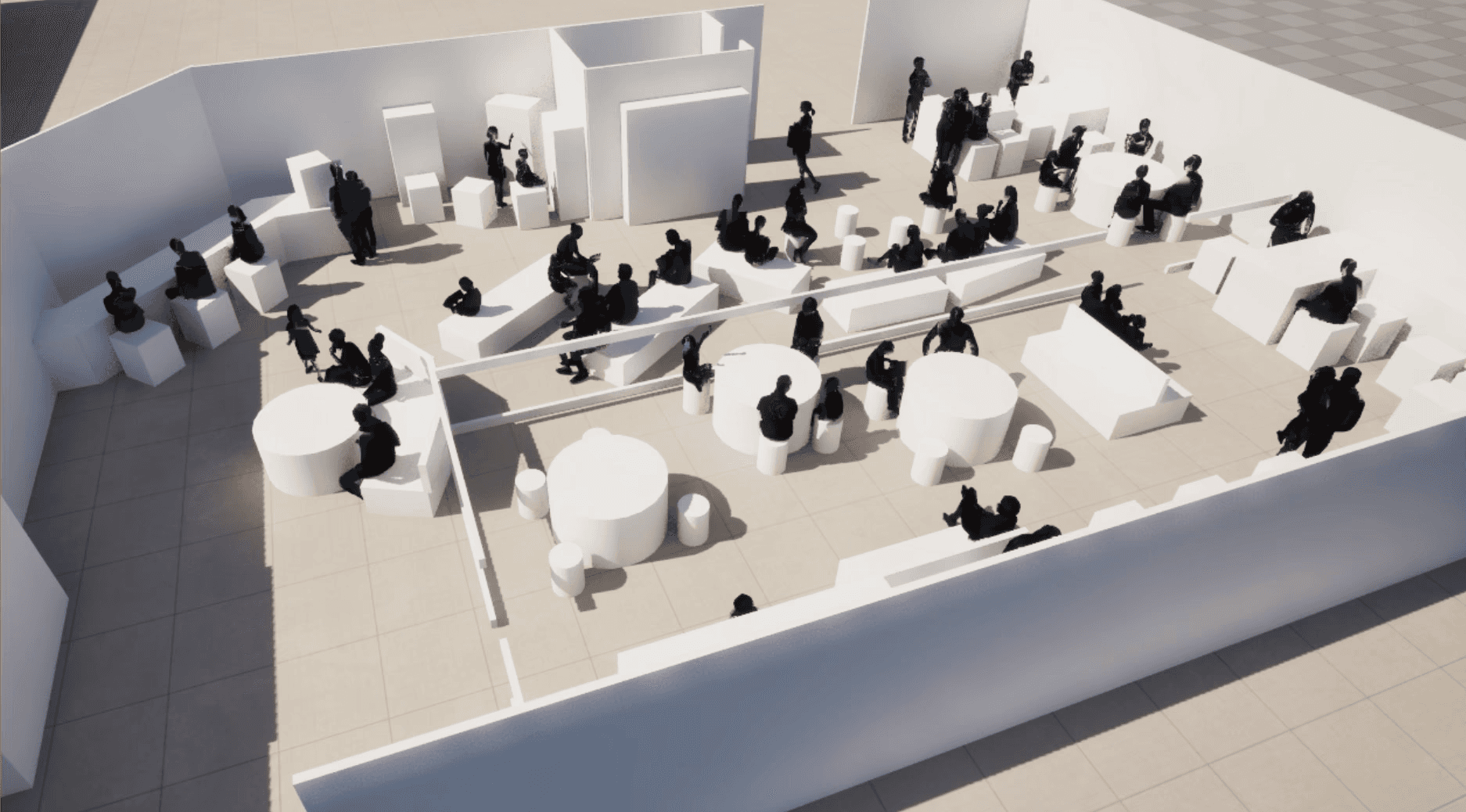
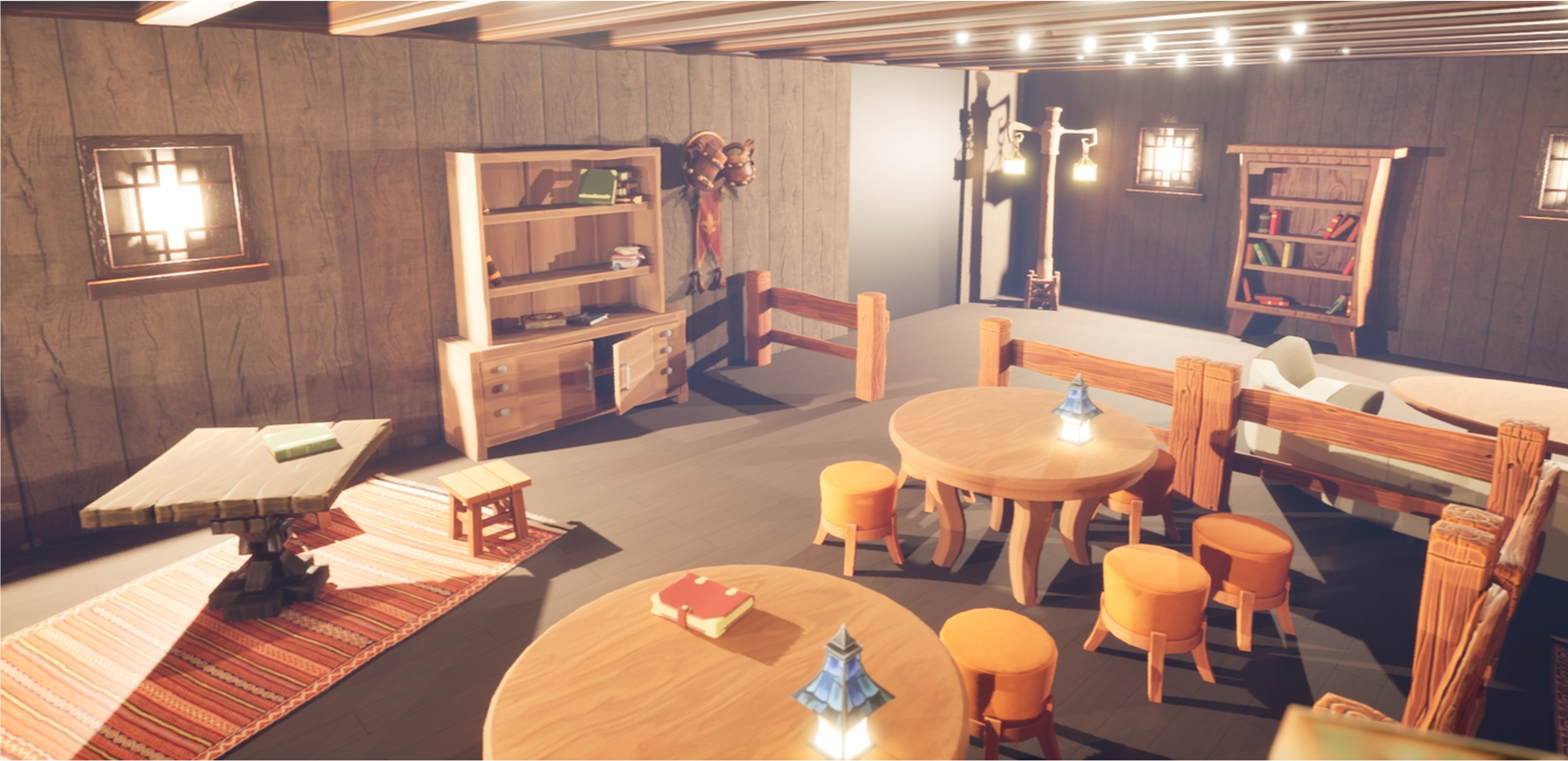
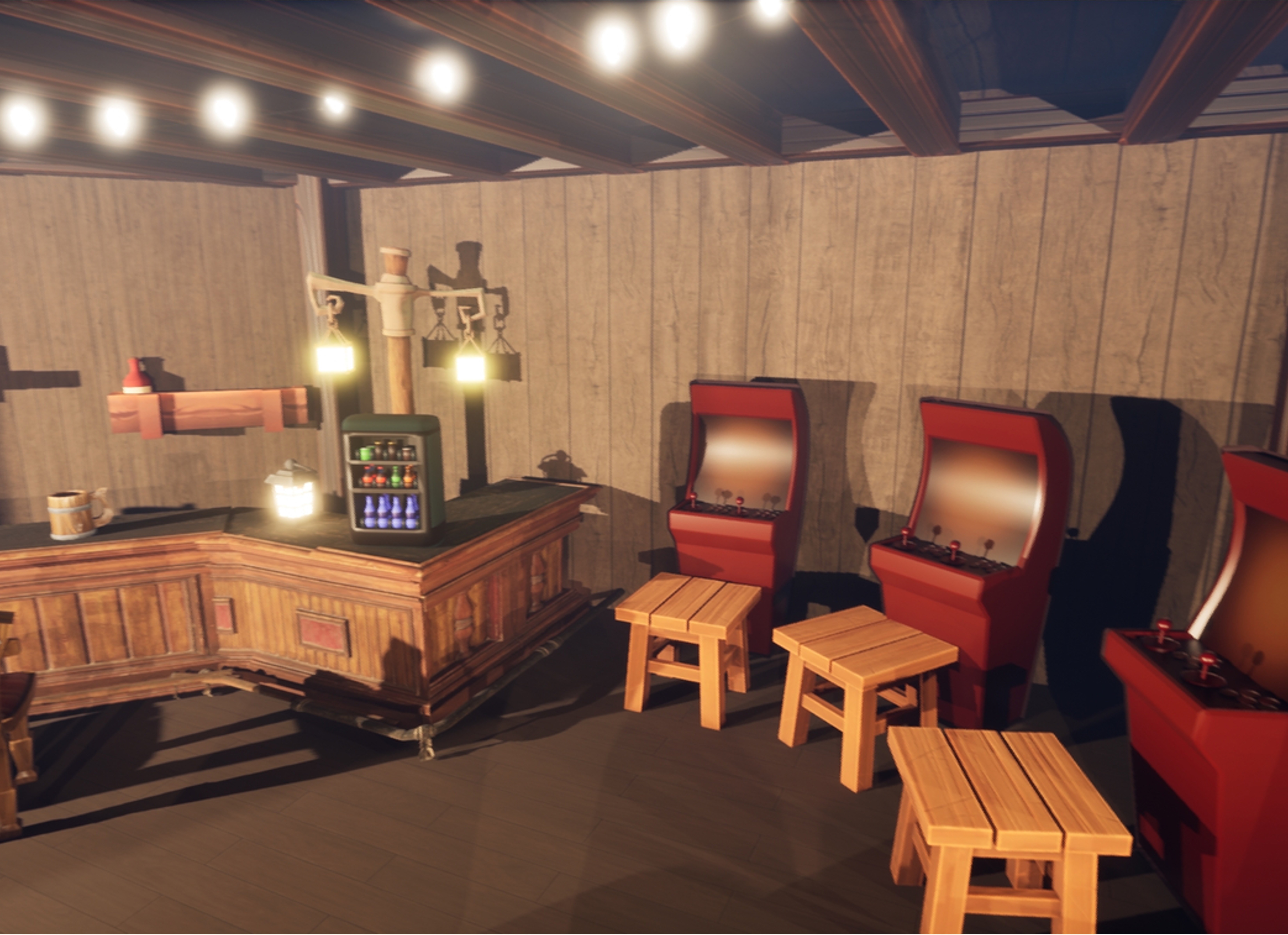
To better understand the viability of the 'Waiting Lounge", I moved from sketches to a fully immersive 3D prototype using Unreal Engine. My goal was to validate the spatial flow, test the lighting, and ensure the digital layer (the app) blended seamlessly with the physical world.
To better understand the viability of the 'Waiting Lounge", I moved from sketches to a fully immersive 3D prototype using Unreal Engine. My goal was to validate the spatial flow, test the lighting, and ensure the digital layer (the app) blended seamlessly with the physical world.
To better understand the viability of the 'Waiting Lounge", I moved from sketches to a fully immersive 3D prototype using Unreal Engine. My goal was to validate the spatial flow, test the lighting, and ensure the digital layer (the app) blended seamlessly with the physical world.
To better understand the viability of the 'Waiting Lounge", I moved from sketches to a fully immersive 3D prototype using Unreal Engine. My goal was to validate the spatial flow, test the lighting, and ensure the digital layer (the app) blended seamlessly with the physical world.
But comfort wasn't enough I needed to engage the visitor during this moment. To make the wait fly by, I designed a Bring Your Own Device (BYOD) Scavenger Hunt.
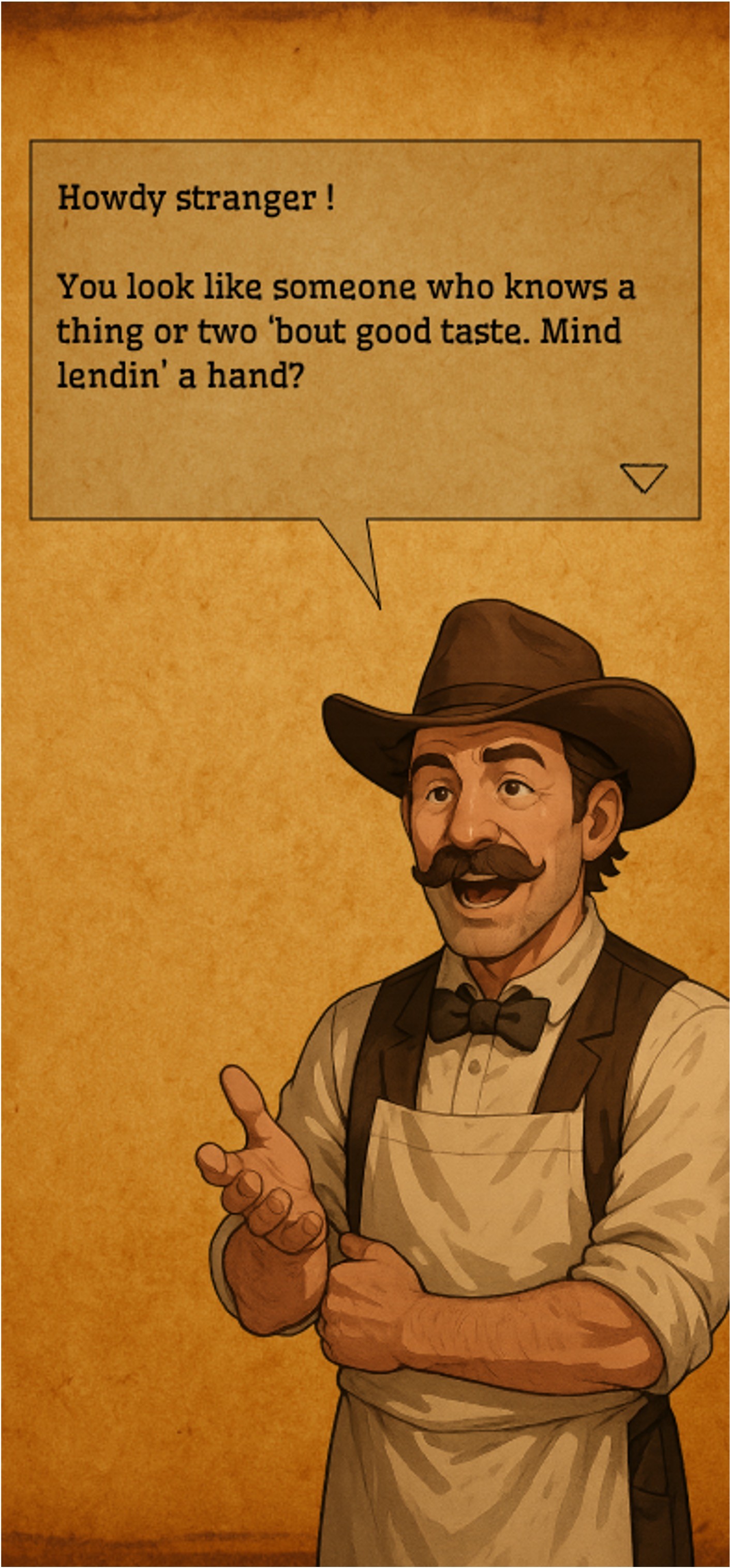
The Story: The Saloon's bartender has lost his secret cocktail recipe.
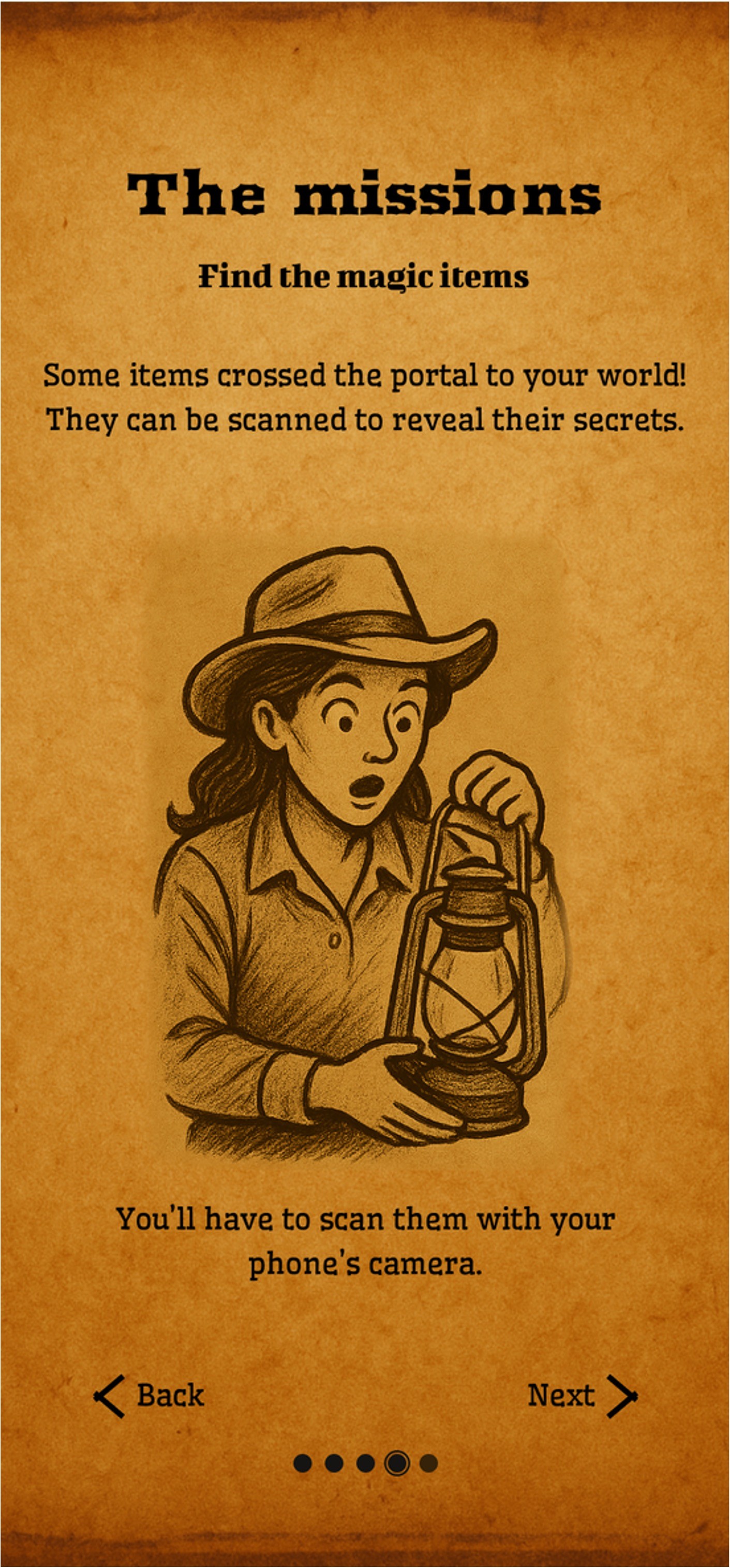
The Interaction: Visitors use their phones to scan physical props in the room (AR/NFC).
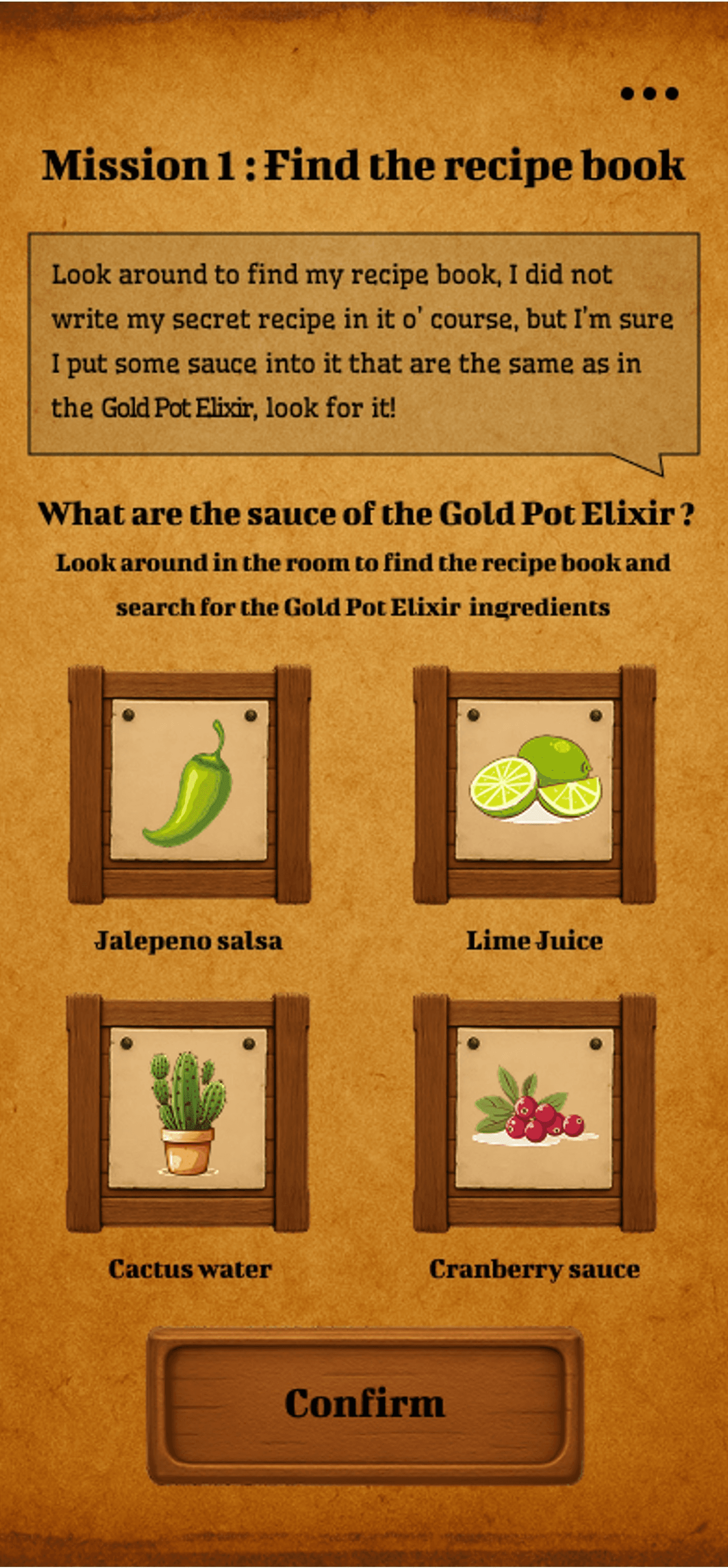
The Reward: Solving the puzzle unlocks an exclusive drink purchase option. This creates an "Augmented Queue" where the physical set and the digital layer work together to deepen the immersion.
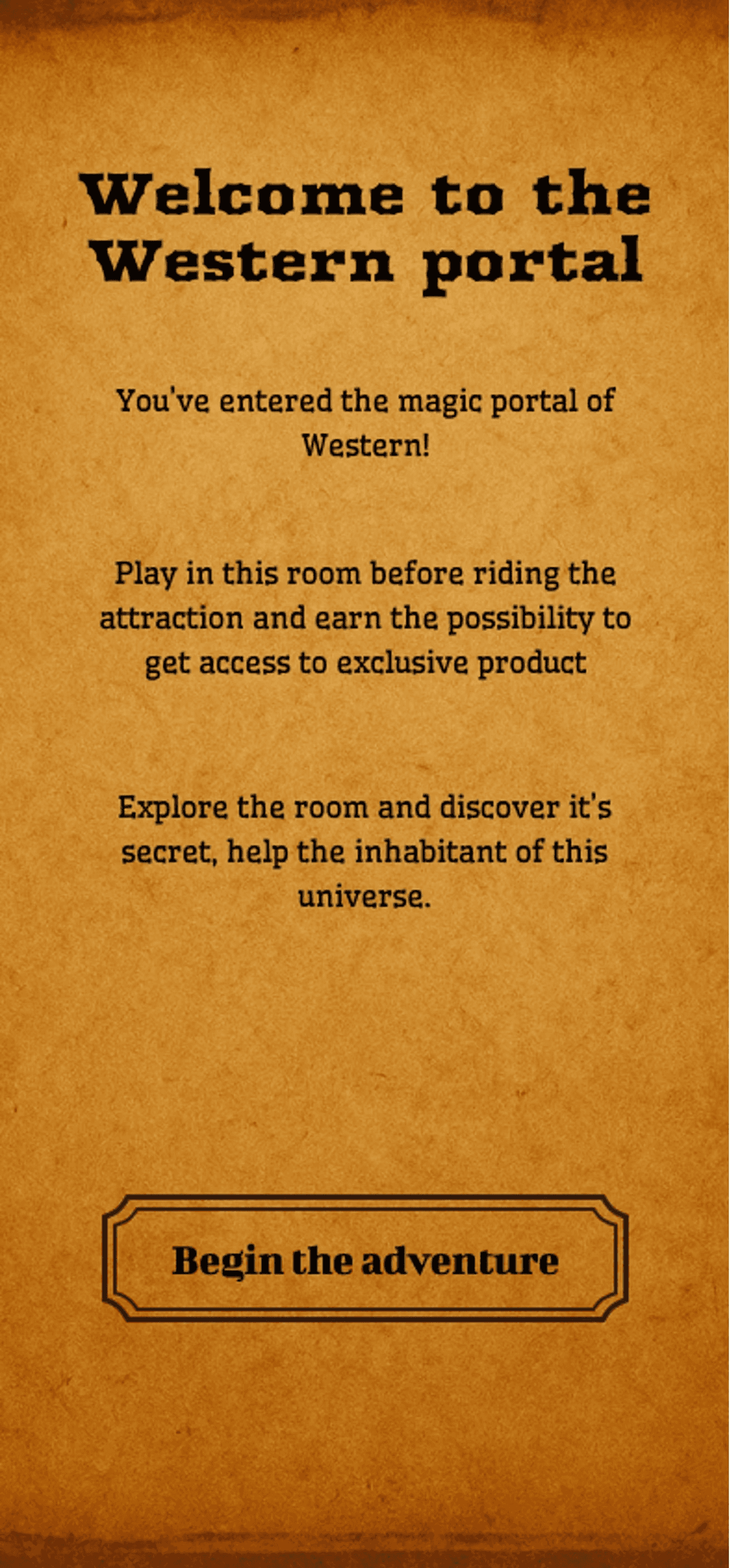
For the Augmented Queue to work, the phone couldn't feel like a piece of modern technology. I designed the UI to be diegetic and coherent with the environment and the attraction lore.
Visual Language: Parchment textures, western typography, and hand-drawn icons replace standard buttons.
The Interaction: The app uses AR and simple ingredient checklists to guide visitors eyes away from the screen and onto the physical props. It'll also invite guest to explore the rooms interact with elements of it and uncover its secrets.
But comfort wasn't enough I needed to engage the visitor during this moment. To make the wait fly by, I designed a Bring Your Own Device (BYOD) Scavenger Hunt.
The Story: The Saloon's bartender has lost his secret cocktail recipe.
The Interaction: Visitors use their phones to scan physical props in the room (AR/NFC).
The Reward: Solving the puzzle unlocks an exclusive drink purchase option. This creates an "Augmented Queue" where the physical set and the digital layer work together to deepen the immersion.
For the Augmented Queue to work, the phone couldn't feel like a piece of modern technology. I designed the UI to be diegetic and coherent with the environment and the attraction lore.
Visual Language: Parchment textures, western typography, and hand-drawn icons replace standard buttons.
The Interaction: The app uses AR and simple ingredient checklists to guide visitors eyes away from the screen and onto the physical props. It'll also invite guest to explore the rooms interact with elements of it and uncover its secrets.
But comfort wasn't enough I needed to engage the visitor during this moment. To make the wait fly by, I designed a Bring Your Own Device (BYOD) Scavenger Hunt.
The Story: The Saloon's bartender has lost his secret cocktail recipe.
The Interaction: Visitors use their phones to scan physical props in the room (AR/NFC).
The Reward: Solving the puzzle unlocks an exclusive drink purchase option. This creates an "Augmented Queue" where the physical set and the digital layer work together to deepen the immersion.
For the Augmented Queue to work, the phone couldn't feel like a piece of modern technology. I designed the UI to be diegetic and coherent with the environment and the attraction lore.
Visual Language: Parchment textures, western typography, and hand-drawn icons replace standard buttons.
The Interaction: The app uses AR and simple ingredient checklists to guide visitors eyes away from the screen and onto the physical props. It'll also invite guest to explore the rooms interact with elements of it and uncover its secrets.
But comfort wasn't enough I needed to engage the visitor during this moment. To make the wait fly by, I designed a Bring Your Own Device (BYOD) Scavenger Hunt.
The Story: The Saloon's bartender has lost his secret cocktail recipe.
The Interaction: Visitors use their phones to scan physical props in the room (AR/NFC).
The Reward: Solving the puzzle unlocks an exclusive drink purchase option. This creates an "Augmented Queue" where the physical set and the digital layer work together to deepen the immersion.
For the Augmented Queue to work, the phone couldn't feel like a piece of modern technology. I designed the UI to be diegetic and coherent with the environment and the attraction lore.
Visual Language: Parchment textures, western typography, and hand-drawn icons replace standard buttons.
The Interaction: The app uses AR and simple ingredient checklists to guide visitors eyes away from the screen and onto the physical props. It'll also invite guest to explore the rooms interact with elements of it and uncover its secrets.
Feedbacks
I presented this concept to both users and industry professionals. The results were compelling:
100% of surveyed users felt this system would make waiting more pleasant.
Users were willing to wait longer in the lounge than in a regular line because the perception of time changed.
This project encourages that by shifting the focus from just "managing crowds" to "designing moments", we can turn a pain point into a highlight of the visitor journey.
I presented this concept to both users and industry professionals. The results were compelling:
100% of surveyed users felt this system would make waiting more pleasant.
Users were willing to wait longer in the lounge than in a regular line because the perception of time changed.
This project encourages that by shifting the focus from just "managing crowds" to "designing moments", we can turn a pain point into a highlight of the visitor journey.
I presented this concept to both users and industry professionals. The results were compelling:
100% of surveyed users felt this system would make waiting more pleasant.
Users were willing to wait longer in the lounge than in a regular line because the perception of time changed.
This project encourages that by shifting the focus from just "managing crowds" to "designing moments", we can turn a pain point into a highlight of the visitor journey.
I presented this concept to both users and industry professionals. The results were compelling:
100% of surveyed users felt this system would make waiting more pleasant.
Users were willing to wait longer in the lounge than in a regular line because the perception of time changed.
This project encourages that by shifting the focus from just "managing crowds" to "designing moments", we can turn a pain point into a highlight of the visitor journey.
Website made by Victor Motti
Website made by Victor Motti
Website made by Victor Motti
Let's get in touch!
Let's get in touch!
Let's get in touch!
Let's get in touch!
victor.motlyc@gmail.com
victor.motlyc@gmail.com
victor.motlyc@gmail.com
victor.motlyc@gmail.com