
C://PORTFOLIO/PROJECTS/GROCERY-TRIP // 2022 // EXHIBITED AT GDC 2023
// EXhibit picture

Grocery trip!
Alternative controller
GAME DESIGN
INteraction design
Arcade
// BRIEF
A school project where we built a video game with its own original controller for an exhibition.
DURATION
3 weeks
TEAM
2 Game Designer
2 Transportation designer
1 Developer
Skills involved
Game Designer
Experience Designer
01
/ GAMEPLAY OVERVIEW
01

A crazy
grocery race!
// PITCH
You're at the supermarket. The list is long, but the timer is short. One of you drives the cart, the other grabs items off the shelves. Other shoppers in your way? Shove them.
// PLAYER OBJECTIVE
GET AS MUCH GROCERIES AS POSSIBLE BEFORE RUNNING OUT OF TIME.
CORE GAMEPLAY LOOP
Navigate through the game
01 DRIVE
Get some points
02 CATCH
Shove those who dare to get in your way.
03 PUNCH!
three things to juggle at once is a lot for one pair of hands.
+ especially when the controller is a shopping cart! +
02
/ THE SPLIT
02
ONE CONTROLLER, two players.
We split the controller between two players. The idea came from a childhood memory: being a kid stuck in the cart while a parent races through the aisles.
SHARED CONTROLLER
NAVIGATE
DRIVE
Find your way, avoid obstacles
Steer & boost
THE PARENT
// PLAYER 1
PUNCH
GRAB
Push other shoppers aside
Reach and snatch
THE CHILD
// PLAYER 2
One choice, three design consequences
// COGNITIVE LOAD
One choice, three design consequences
// COOPERATION
Players need to sync up to get points.
// DIVIDED INPUTS
A weird controller becomes manageable when shared.
03
/ GAME FEEL
03
The real challenge: making the cart feel fun.
A shopping cart is annoying to push in real life, that was our raw material. Game feel was the job: turn the friction of a clumsy object into the pleasure of a well-tuned one.
PHASE 1 // ON SCREEN
First, we tuned the cart on keyboards.
Steering, accelerating, dodging, all done from a laptop, with arrows and a free vehicle script we'd pulled off the internet. After a few rounds of adjustments, the cart felt workable. Not great, but playable.
“It almost felt right”
PHASE 2 // ON THE CART
Then we plugged the controller in.
Same game, same code, same physics. Different planet. The cart drifted past every aisle, accelerated into walls, refused to turn. Players stopped laughing and started apologizing.
“A tank on a frozen lake”
PHASE 3 // THE TUNING
Four parameters. Dozens of user tests.
We grabbed anyone passing the studio: classmates, friends, randoms, and watched. Did they smile while playing, or only after? Push acceleration too high, you get an F1 in sand. Too low, you're back to the tank. The right answer was always between two failures.
// TUNING NOTEBOOK
Acceleraration
WAS
Bump into every walls
NOW
Speed builds up smoothly
Turning radius
WAS
Slide past every aisle
NOW
Tight, drift-ready and responsive
Ground grip
WAS
Ice rink
NOW
Sticky, but fast
Braking
WAS
Stop instantly, or slide forever
NOW
Cart settle on its own
There was no single moment when it clicked. Just a slow convergence, test after test, value after value, until the cart stopped feeling like a problem and started feeling like a ride.
04
/ ELECTRONICS
04
Wiring the cart: where UX met hardware.
I never wired anything before. So I learned by doing on this project.

Steering sensors
Controls the direction

Driver controls
The inputs to go forward or backward

Punching & grabing pads
To interact with the structure

Input board
What turns input into actions
01
PHYSICAL GESTURE
>
02
SENSOR / CONTROL
>
03
INPUT BOARD
>
04
UNITY ENGINE
>
05
ON-SCREEN ACTION
// SYSTEM FLOW
// WHAT I LEARNED
Adding a sensor is a design decision, not just a technical part.
Cable is invisible UX too: if a wire gets in a hand, the player feels
it before they see it and it can becomes a big friction.
Hardware iterates like software: think, test, adjust; but with a
soldering iron.
04
/ ELECTRONICS
05
GDC 2023!
We applied to exhibit our game at GDC 2023, the largest conference for video game industry professionals in San Francisco. Months later, we received the exciting news: our application was accepted!
// HOW WE GOT THERE
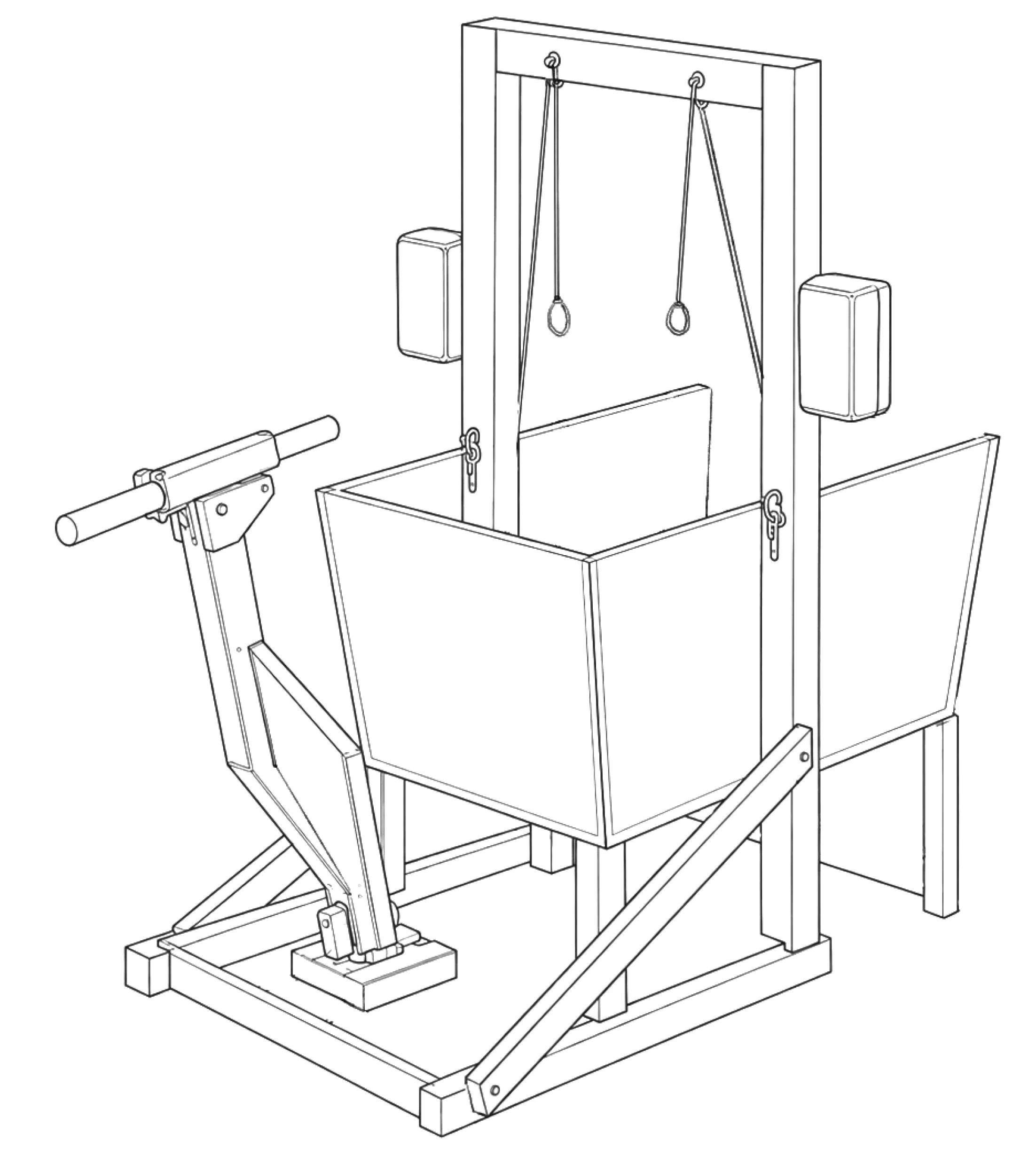
We couldn't fly a real shopping cart to San Francisco like this. So we rebuilt one in wood, this time foldable, as a structure that collapses into a flight-safe box, including all the stuff needed for the game to work.
// THE TEST THAT MATTERED
We knew the game feel worked when players laughed mid-game.
For us mid-game laughter means the controller disappears, and only the game and fun remains.
One player even came back 11 times in a row chasing the leaderboard!
3 days
// ON THE FLOOR
200+
// PLAYERS TRIED IT

THE BUILD
Foldable cart rebuilt in wood, trip-ready.
// OTHER COOL PROJECTS
// 1
GROCERY TRIP!
// 2
EVOLVE
// 3
PARK THESIS
// 4
TERRASCAPE
// 5
MUSEUM
EXPERIENCE
LET’S CREATE SOMETHING FUN TOGETHER!
// CONTACT
victor.motlyc@gmail.com
in/victor-motti-207930228/
// WEBSITE BUILT WITH CARE BY VICTOR MOTTI