EVOLVE
EVOLVE
EVOLVE
6 Months
6 Months
6 Months
6 Months
DURATION
DURATION
Product Design
UX Design
Product Design
UX Design
Product Design
UX Design
Product Design
UX Design
ROLES
ROLES
Team work
Prototyping
User analysis
Management
Team work
Prototyping
User analysis
Management
Team work
Prototyping
User analysis
Management
Team work
Prototyping
User analysis
Management
SKILLS INVOLVED
SKILLS INVOLVED
4 Product Designers
1 UX Designer
4 Product Designers
1 UX Designer
4 Product Designers
1 UX Designer
4 Product Designers
1 UX Designer
TEAM
TEAM
BRIEF
BRIEF
Van Rysel, a high-performance cycling gear brand, came to us to help them create the future of home training for cyclists. Current solutions have many issues and the experience they offer is often lackluster. Our mission was to find ideas to provide a better product experience to our users.
The subject: "Pain Caves"
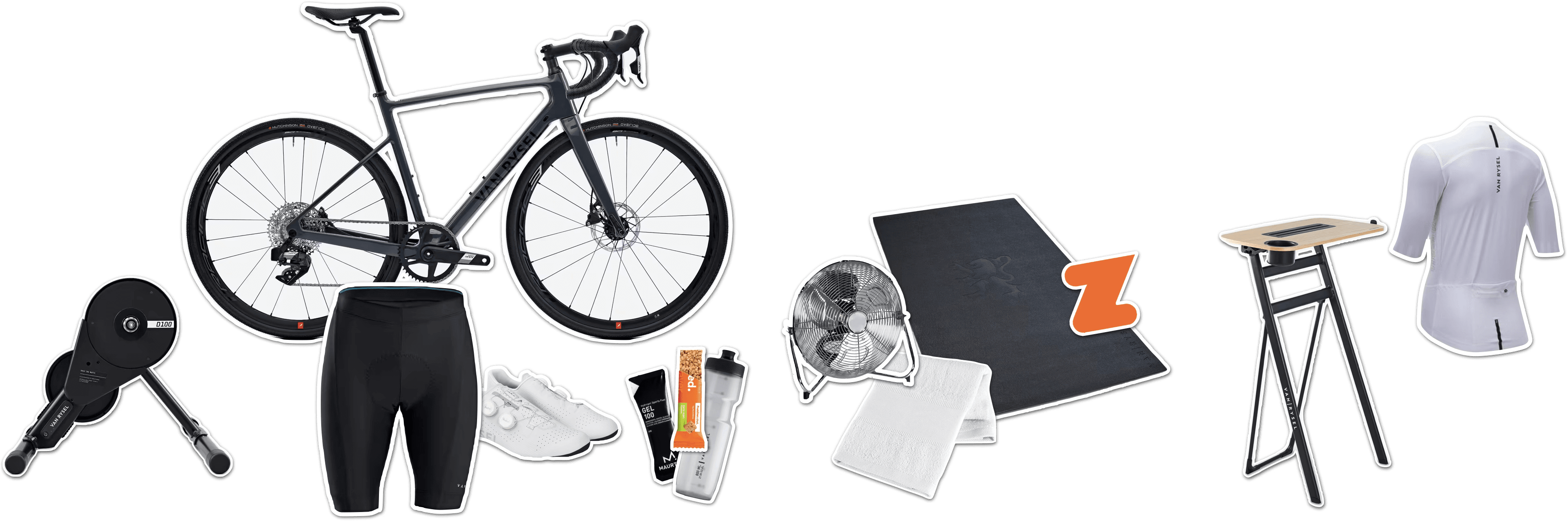
The company approached us to tackle "pain cave" issues. At first, we didn't know what it was, but it's actually quite simple: the "pain cave" is the space where cyclists train at home. It gets its name from the fact that cyclists must embrace the pain to surpass themselves and perform at their best.
A pain cave is a very flexible concept; essentially, any place where a cyclist trains at home is a pain cave. While some people have a dedicated space in which they have invested a lot of money, others simply set up in their living room.
The company approached us to tackle "pain cave" issues. At first, we didn't know what it was, but it's actually quite simple: the "pain cave" is the space where cyclists train at home. It gets its name from the fact that cyclists must embrace the pain to surpass themselves and perform at their best.
A pain cave is a very flexible concept; essentially, any place where a cyclist trains at home is a pain cave. While some people have a dedicated space in which they have invested a lot of money, others simply set up in their living room.
The company approached us to tackle "pain cave" issues. At first, we didn't know what it was, but it's actually quite simple: the "pain cave" is the space where cyclists train at home. It gets its name from the fact that cyclists must embrace the pain to surpass themselves and perform at their best.
A pain cave is a very flexible concept; essentially, any place where a cyclist trains at home is a pain cave. While some people have a dedicated space in which they have invested a lot of money, others simply set up in their living room.
The company approached us to tackle "pain cave" issues. At first, we didn't know what it was, but it's actually quite simple: the "pain cave" is the space where cyclists train at home. It gets its name from the fact that cyclists must embrace the pain to surpass themselves and perform at their best.
A pain cave is a very flexible concept; essentially, any place where a cyclist trains at home is a pain cave. While some people have a dedicated space in which they have invested a lot of money, others simply set up in their living room.
Issues with pain caves
Pain caves can include various tools and equipment to improve the cycling experience, but this comes at a cost: the more you add, the more complex it becomes to set up. It can take up to 15 minutes to get ready, move the bike from one side of the home to another, and prepare the training area.


User research
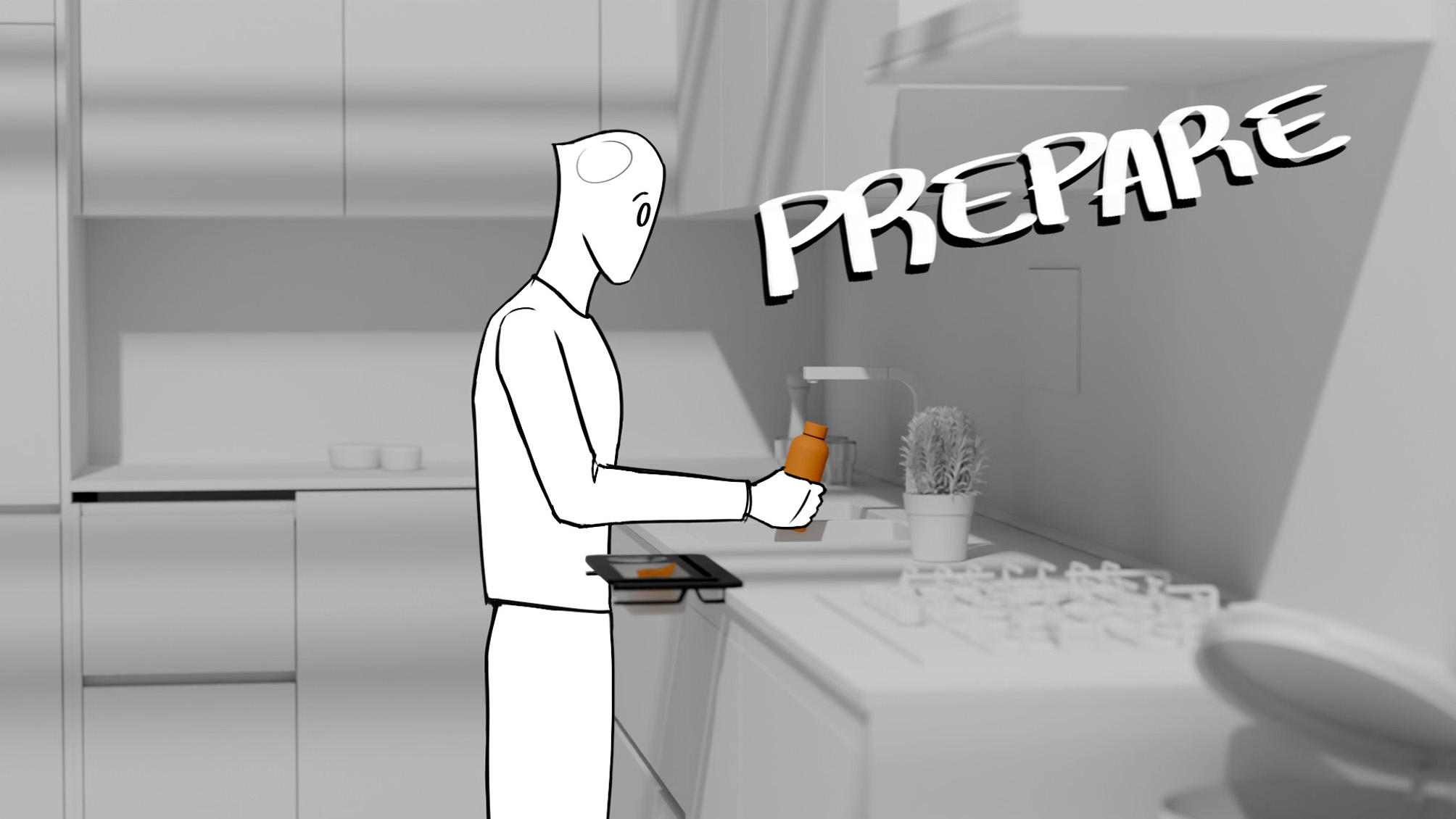
The main goal of this project was to reduce installation time because this was not the "good" kind of pain cyclists need to train, but rather a source of friction that drains their motivation. Through interviewing users and observing their home training sessions, we identified several key pain points:
Installation & Storage: This was the initial challenge Van Rysel brought to us, and we confirmed it was a real hurdle especially for those living in small apartments who need to store their gear when not in use. After a session, users hate having to tidy everything up and would much rather head straight to the shower.
Seasonality: We noted a clear difference between the "on-season" (spring-autumn), when cyclists mostly ride outdoors, and the "off-season" (winter), when home training becomes a daily necessity.
Motivation & Environment: During training, every user we studied engaged in secondary activities, such as watching TV shows. This adds even more equipment to the "pain cave," which isn't always related to the training itself. Additionally, heat is a major issue; high-intensity exercise in a small room quickly raises the ambient temperature.
Lack of Feedback: Many users train because they feel they "have to", but they lack clear information about their performance and progress. While some use specific apps or devices to track data, these often require even more energy and setup.
The main goal of this project was to reduce installation time because this was not the "good" kind of pain cyclists need to train, but rather a source of friction that drains their motivation. Through interviewing users and observing their home training sessions, we identified several key pain points:
Installation & Storage: This was the initial challenge Van Rysel brought to us, and we confirmed it was a real hurdle especially for those living in small apartments who need to store their gear when not in use. After a session, users hate having to tidy everything up and would much rather head straight to the shower.
Seasonality: We noted a clear difference between the "on-season" (spring-autumn), when cyclists mostly ride outdoors, and the "off-season" (winter), when home training becomes a daily necessity.
Motivation & Environment: During training, every user we studied engaged in secondary activities, such as watching TV shows. This adds even more equipment to the "pain cave," which isn't always related to the training itself. Additionally, heat is a major issue; high-intensity exercise in a small room quickly raises the ambient temperature.
Lack of Feedback: Many users train because they feel they "have to", but they lack clear information about their performance and progress. While some use specific apps or devices to track data, these often require even more energy and setup.
The main goal of this project was to reduce installation time because this was not the "good" kind of pain cyclists need to train, but rather a source of friction that drains their motivation. Through interviewing users and observing their home training sessions, we identified several key pain points:
Installation & Storage: This was the initial challenge Van Rysel brought to us, and we confirmed it was a real hurdle especially for those living in small apartments who need to store their gear when not in use. After a session, users hate having to tidy everything up and would much rather head straight to the shower.
Seasonality: We noted a clear difference between the "on-season" (spring-autumn), when cyclists mostly ride outdoors, and the "off-season" (winter), when home training becomes a daily necessity.
Motivation & Environment: During training, every user we studied engaged in secondary activities, such as watching TV shows. This adds even more equipment to the "pain cave," which isn't always related to the training itself. Additionally, heat is a major issue; high-intensity exercise in a small room quickly raises the ambient temperature.
Lack of Feedback: Many users train because they feel they "have to", but they lack clear information about their performance and progress. While some use specific apps or devices to track data, these often require even more energy and setup.
The main goal of this project was to reduce installation time because this was not the "good" kind of pain cyclists need to train, but rather a source of friction that drains their motivation. Through interviewing users and observing their home training sessions, we identified several key pain points:
Installation & Storage: This was the initial challenge Van Rysel brought to us, and we confirmed it was a real hurdle especially for those living in small apartments who need to store their gear when not in use. After a session, users hate having to tidy everything up and would much rather head straight to the shower.
Seasonality: We noted a clear difference between the "on-season" (spring-autumn), when cyclists mostly ride outdoors, and the "off-season" (winter), when home training becomes a daily necessity.
Motivation & Environment: During training, every user we studied engaged in secondary activities, such as watching TV shows. This adds even more equipment to the "pain cave," which isn't always related to the training itself. Additionally, heat is a major issue; high-intensity exercise in a small room quickly raises the ambient temperature.
Lack of Feedback: Many users train because they feel they "have to", but they lack clear information about their performance and progress. While some use specific apps or devices to track data, these often require even more energy and setup.


Design thinking & prototyping
Our product proposition
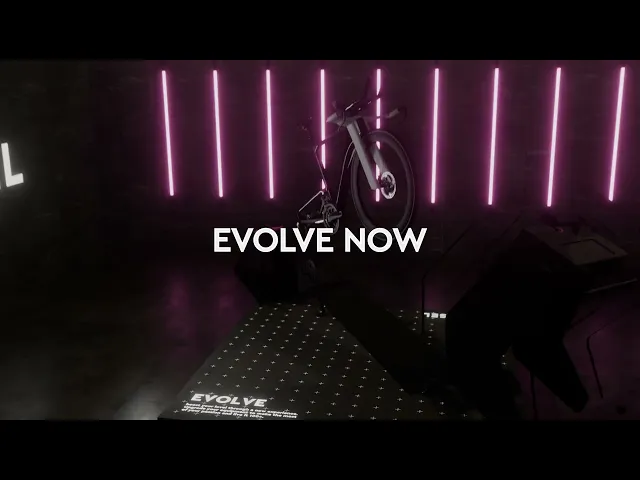
This product was designed as an all-in-one device that consolidates everything that was previously a cluttered setup into a single product. This solves the main issue: it now takes only a few seconds to deploy the device and start a training session.
Once the user finishes their session, they can simply fold the product and mount their bike directly onto it. We noticed that cyclists love their bikes and are often very proud of them; this product allows them to display their beloved bike in their home while storing it efficiently.
During the on-season, or if the user prefers to store it in a garage or another room, the integrated wheels make it easy to transport.
This product was designed as an all-in-one device that consolidates everything that was previously a cluttered setup into a single product. This solves the main issue: it now takes only a few seconds to deploy the device and start a training session.
Once the user finishes their session, they can simply fold the product and mount their bike directly onto it. We noticed that cyclists love their bikes and are often very proud of them; this product allows them to display their beloved bike in their home while storing it efficiently.
During the on-season, or if the user prefers to store it in a garage or another room, the integrated wheels make it easy to transport.
This product was designed as an all-in-one device that consolidates everything that was previously a cluttered setup into a single product. This solves the main issue: it now takes only a few seconds to deploy the device and start a training session.
Once the user finishes their session, they can simply fold the product and mount their bike directly onto it. We noticed that cyclists love their bikes and are often very proud of them; this product allows them to display their beloved bike in their home while storing it efficiently.
During the on-season, or if the user prefers to store it in a garage or another room, the integrated wheels make it easy to transport.
This product was designed as an all-in-one device that consolidates everything that was previously a cluttered setup into a single product. This solves the main issue: it now takes only a few seconds to deploy the device and start a training session.
Once the user finishes their session, they can simply fold the product and mount their bike directly onto it. We noticed that cyclists love their bikes and are often very proud of them; this product allows them to display their beloved bike in their home while storing it efficiently.
During the on-season, or if the user prefers to store it in a garage or another room, the integrated wheels make it easy to transport.


Work on the motivation
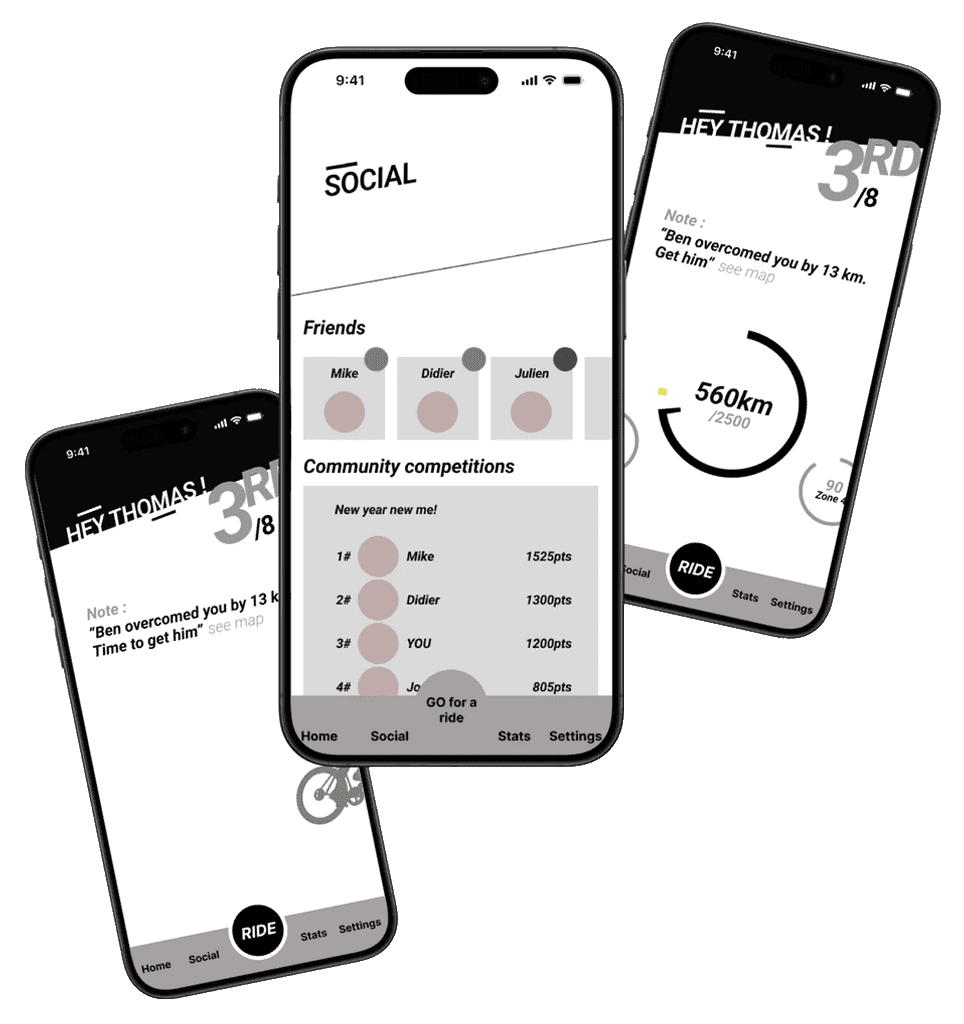
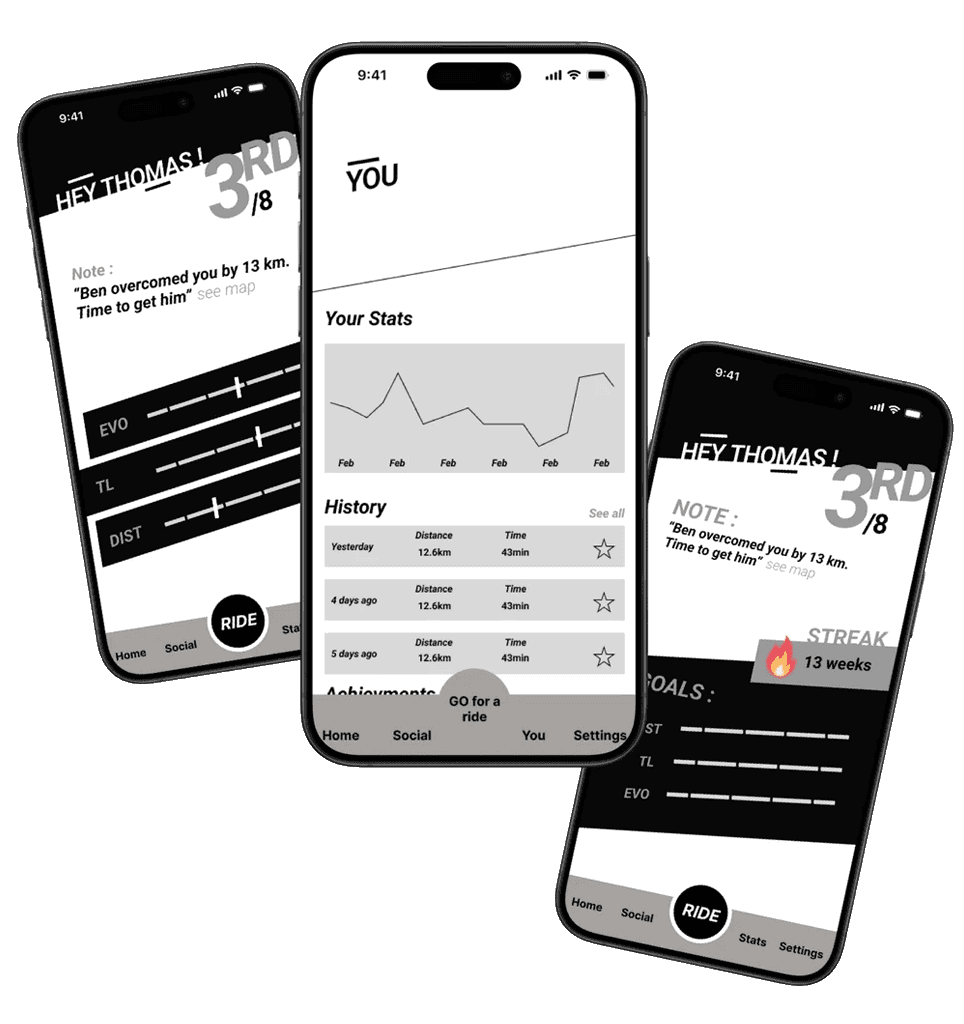
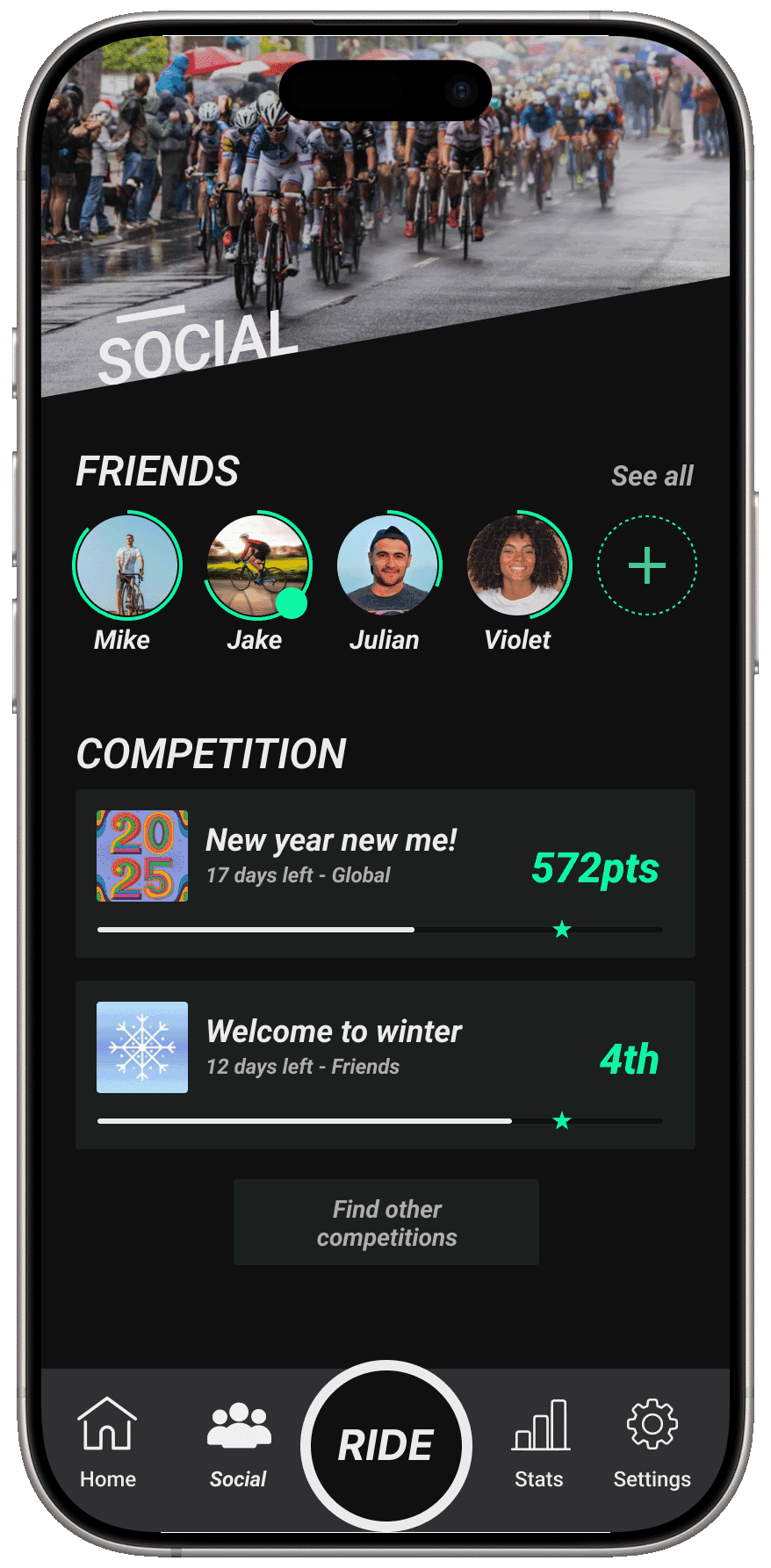
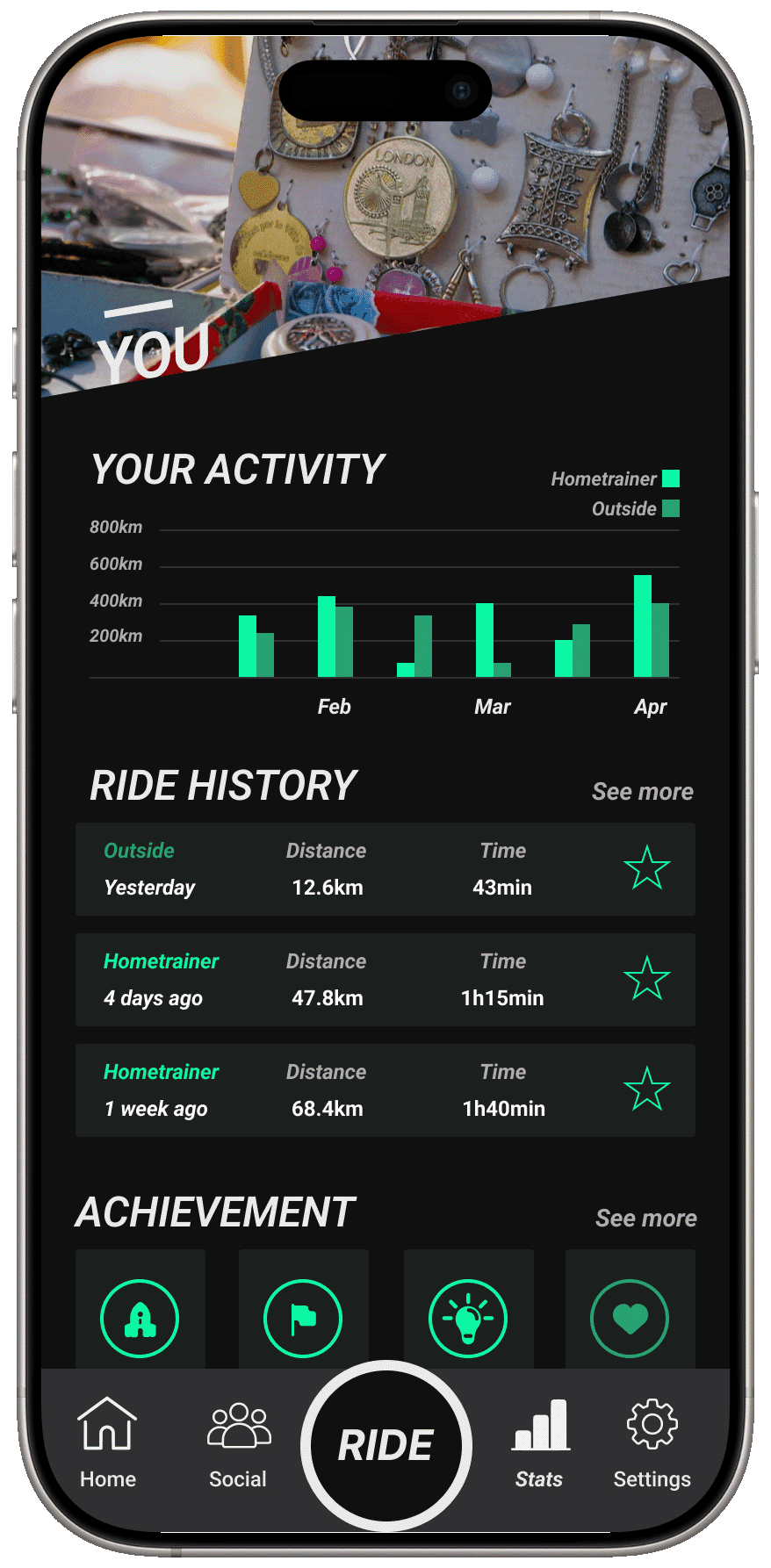
Once the primary issue was addressed, we also wanted to tackle another challenge identified during our research: motivation. We defined three key pillars to boost engagement: long-term commitment, social interaction, and performance guidance.
To achieve this, we designed a companion app to work in tandem with the device. It allows users to access their training data, receive personalized insights, train with friends, and track their progress over time.
Once the primary issue was addressed, we also wanted to tackle another challenge identified during our research: motivation. We defined three key pillars to boost engagement: long-term commitment, social interaction, and performance guidance.
To achieve this, we designed a companion app to work in tandem with the device. It allows users to access their training data, receive personalized insights, train with friends, and track their progress over time.
Once the primary issue was addressed, we also wanted to tackle another challenge identified during our research: motivation. We defined three key pillars to boost engagement: long-term commitment, social interaction, and performance guidance.
To achieve this, we designed a companion app to work in tandem with the device. It allows users to access their training data, receive personalized insights, train with friends, and track their progress over time.
Once the primary issue was addressed, we also wanted to tackle another challenge identified during our research: motivation. We defined three key pillars to boost engagement: long-term commitment, social interaction, and performance guidance.
To achieve this, we designed a companion app to work in tandem with the device. It allows users to access their training data, receive personalized insights, train with friends, and track their progress over time.


Website made by Victor Motti
Let's get in touch!
Let's get in touch!
Let's get in touch!
Let's get in touch!
victor.motlyc@gmail.com